Hi-Fi Hall of Fame
People Inductee
Peter Goldmark
Introduction
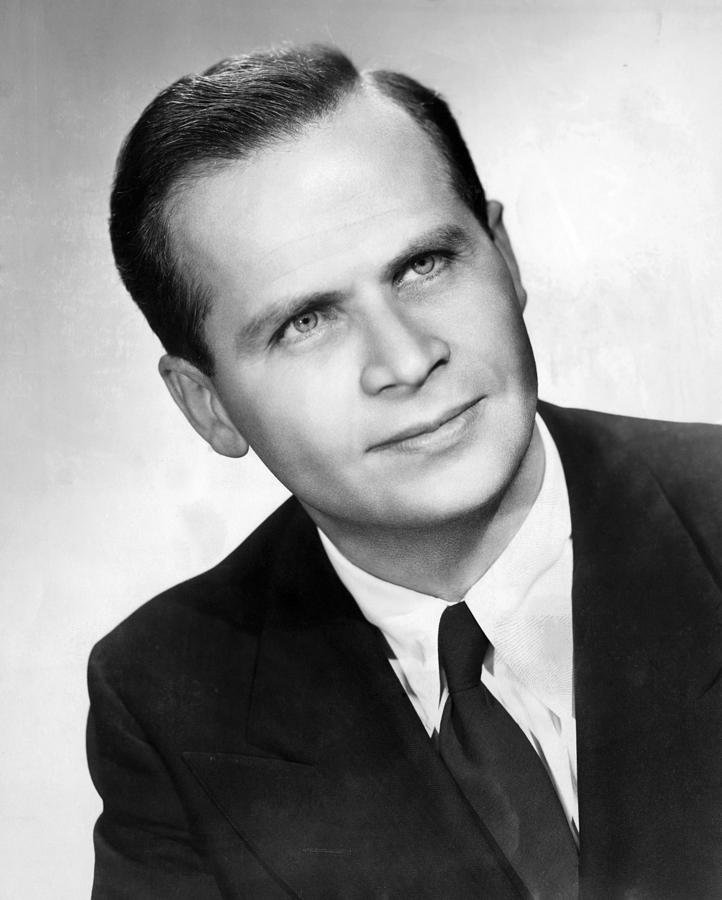
Our next inductee is Peter Carl Goldmark, a prolific inventor who was the primary inventor of the Long Play (LP) record that we all know and love. Let’s take a look at Mr. Goldmark’s outstanding achievements that have placed him in the Hi-Fi Hall of Fame.
Biography
Peter Carl Goldmark (December 2, 1906 – December 7, 1977) was a Hungarian-born American engineer who transformed both the music and broadcasting industries. Joining Columbia Broadcasting System (CBS) Laboratories in 1936—where he eventually served as chief engineer and president—he held over 150 patents across a prolific career.
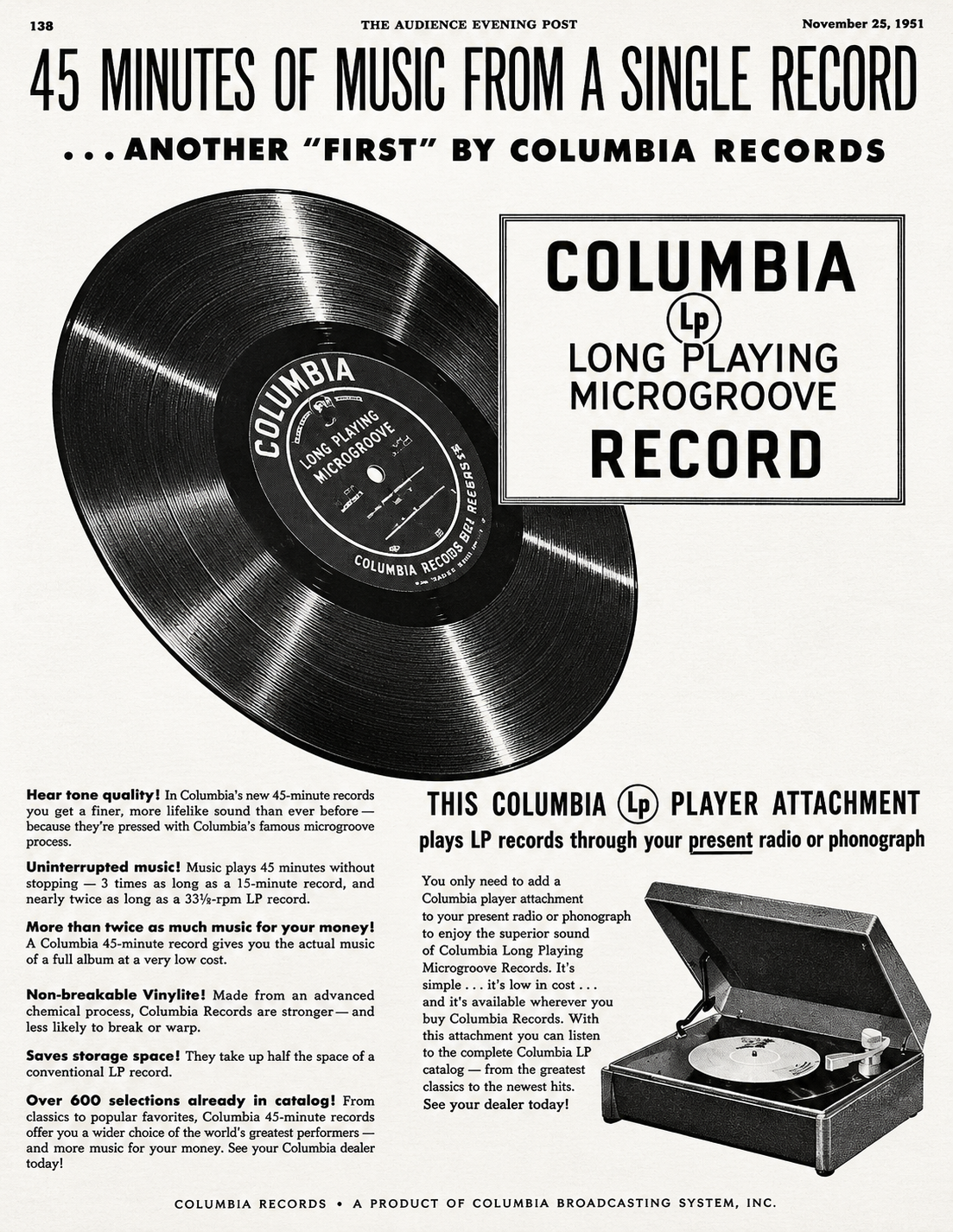
Goldmark is best known for developing the 33⅓ Revolution-per-Minute (RPM) long-playing (LP) phonograph record in 1948. By expanding playback time to 23 minutes per side (compared to roughly four minutes on standard 78 rpm records), his invention revolutionized how music was recorded and consumed, establishing a vinyl format that remains an industry standard today.
Long Playing (LP) Record
Before the mid-20th century, listening to recorded music at home was a fragmented and physically demanding experience. Standard phonograph records spun at 78 revolutions per minute (rpm) and could hold only about four minutes of audio per side. For longer classical pieces or multiple songs, listeners had to stack heavy shellac discs in bulky record changers or constantly get up to flip and replace records. This limitation fundamentally restricted the scope of home audio consumption until Hungarian-born American engineer Peter Goldmark and his team stepped in with a revolutionary technological solution.
In 1948, Goldmark and his team at CBS Laboratories introduced the LP record, transforming the way the world experienced sound. The breakthrough was rooted in radical engineering precision. Utilizing a groove width of only 0.003 inch (0.076 millimetre), as compared with 0.01 inch for the old 78-rpm records, the equivalent of six 78-rpm records could be compressed into one 33 1/3 LP. This microscopic reduction in groove dimensions—paired with a slower rotational speed of 33 1/3 rpm and durable, flexible vinyl material instead of brittle shellac—allowed a single 12-inch disc to hold up to 23 minutes of continuous music per side.
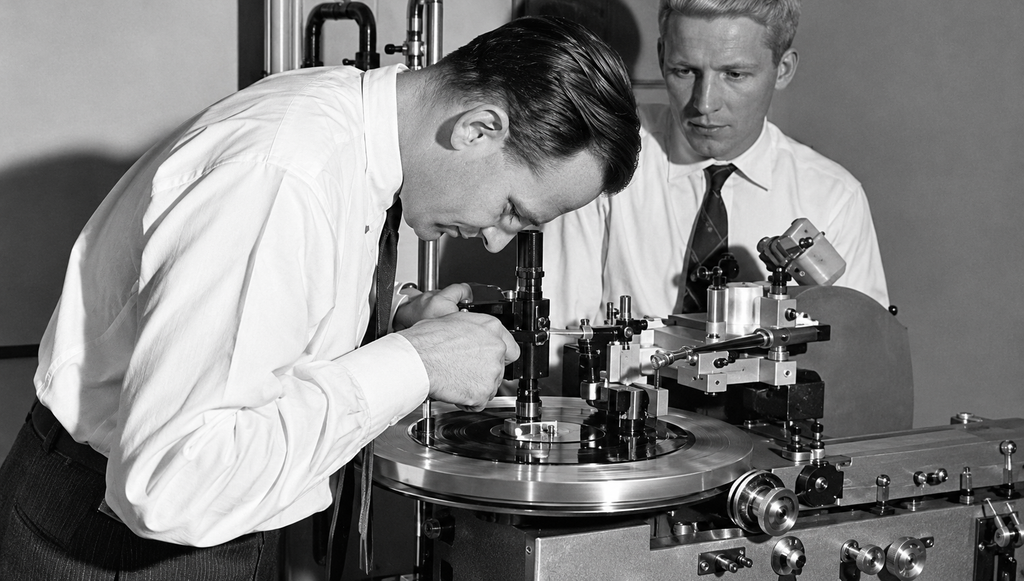
CBS Laboratories chief engineer Peter Carl Goldmark (left) and sound engineer Rene Snepvangers (right) examining a phonograph record master on a cutting lathe.
The introduction of the Long Play record did far more than save physical shelf space; it fundamentally reshaped the music industry and consumer culture. Classical music lovers could finally listen to entire symphonies, operas, and concertos without jarring interruptions. Jazz and pop artists suddenly had an extended canvas, giving rise to the concept of the cohesive “album” rather than just isolated singles. Furthermore, sonic fidelity improved significantly, offering cleaner sound and less background noise.
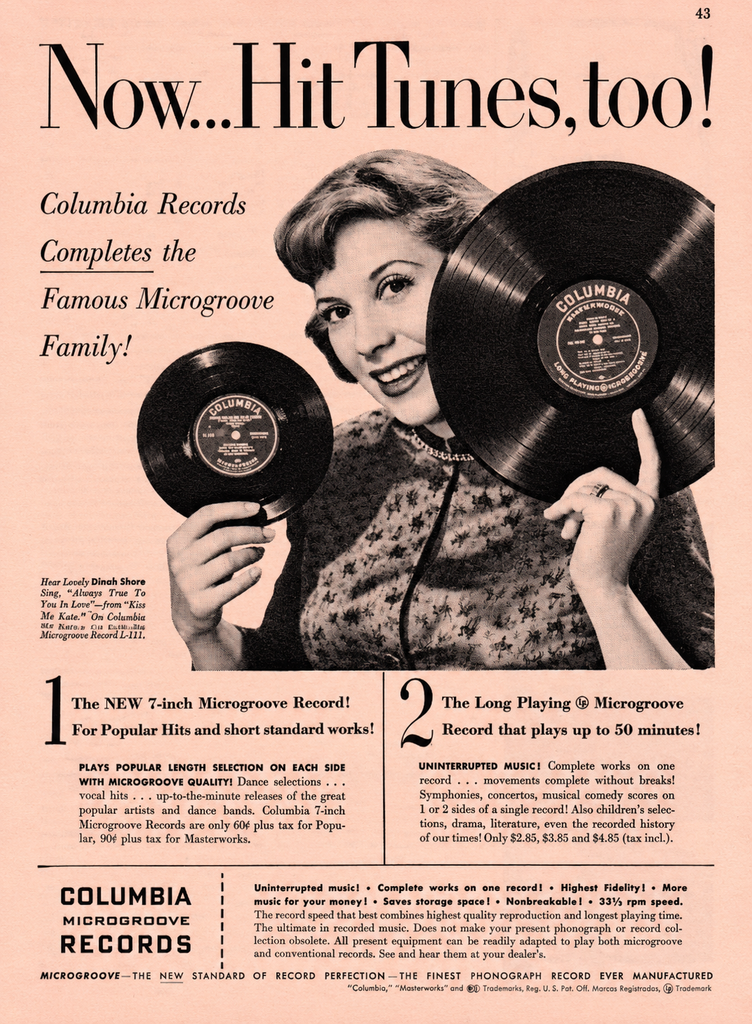
Goldmark’s 1948 masterpiece remains an enduring blueprint in audio engineering. Decades after its debut, the vinyl LP format has experienced a massive cultural renaissance, proving that the engineering milestones achieved by CBS Laboratories nearly eighty years ago still resonate deeply with modern audiophiles today.
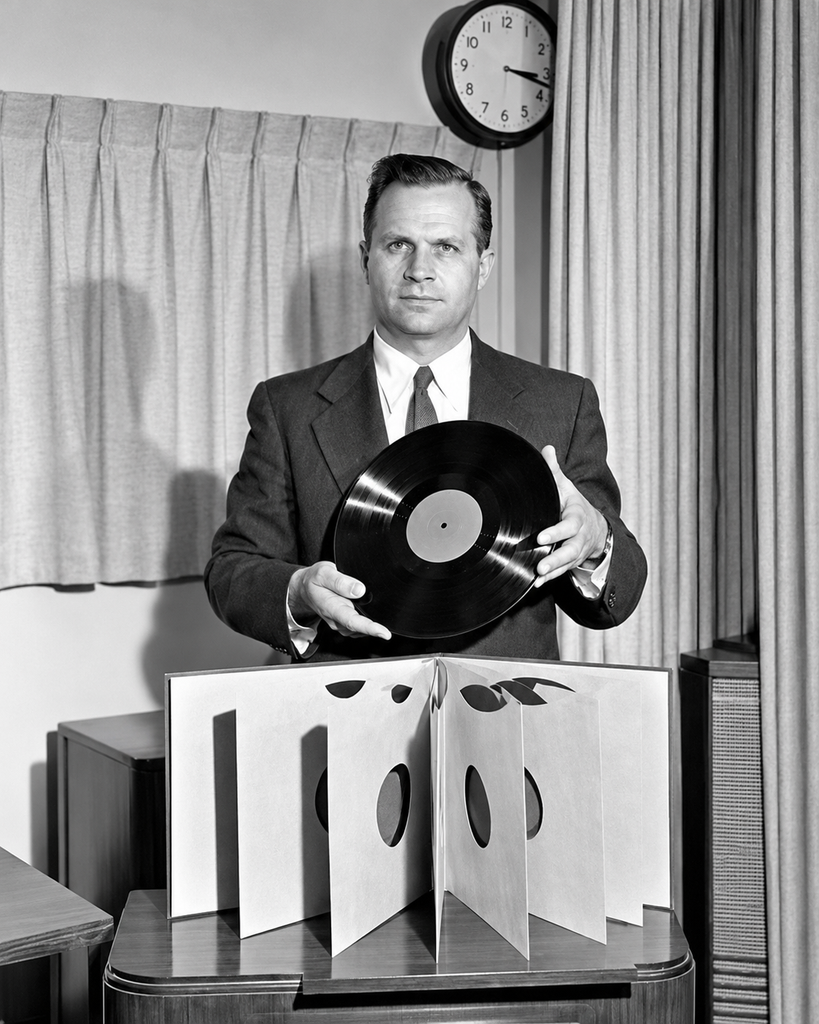
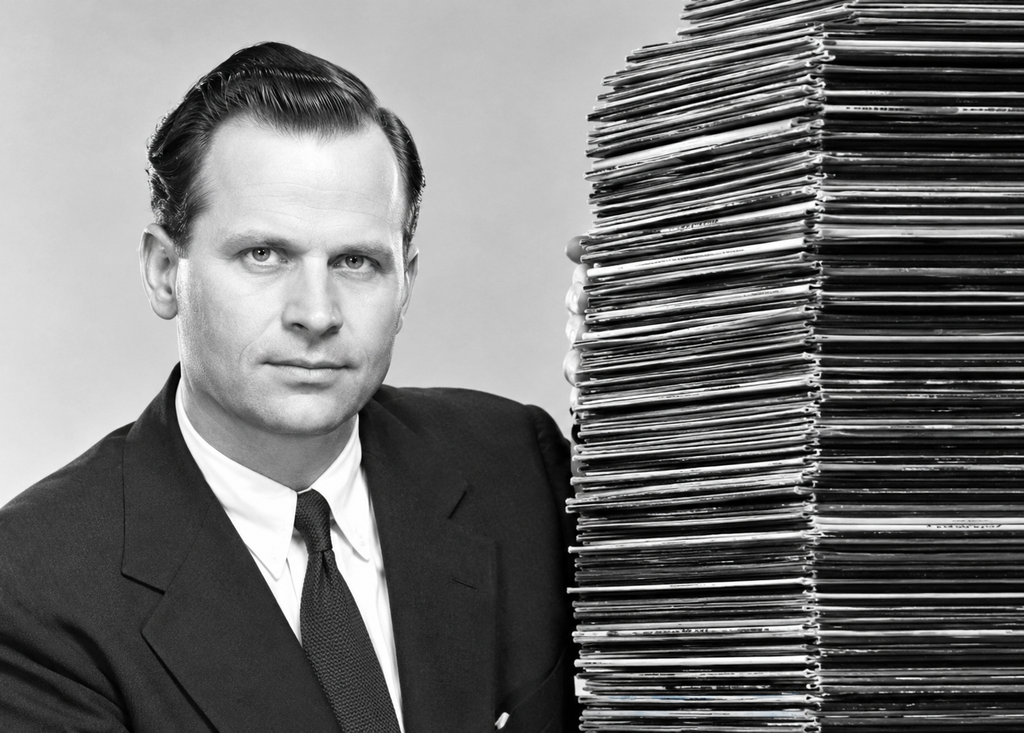
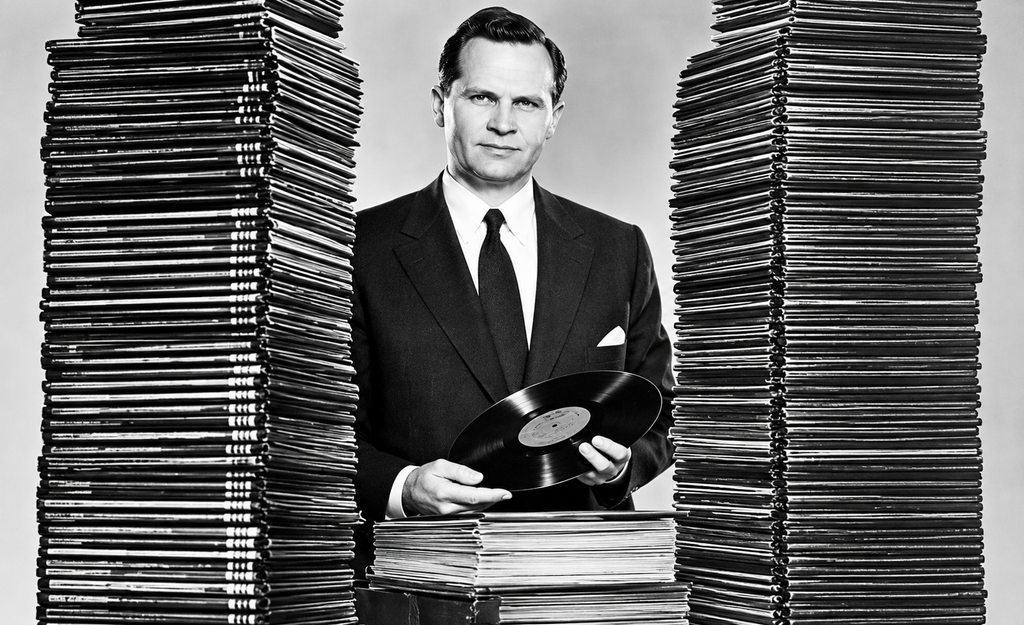
Fun Fact: Why is the LP called a “Record Album”?
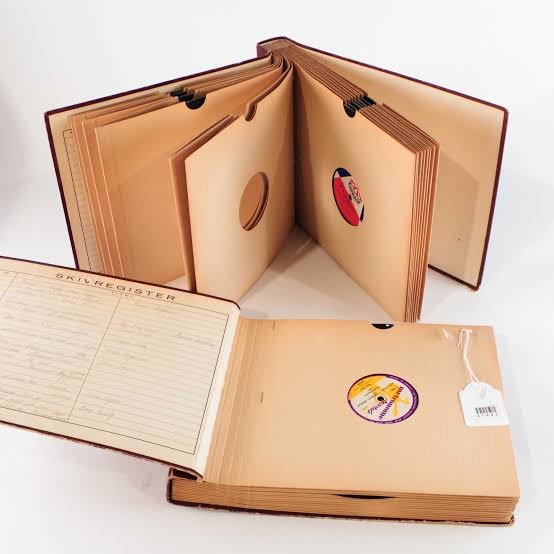
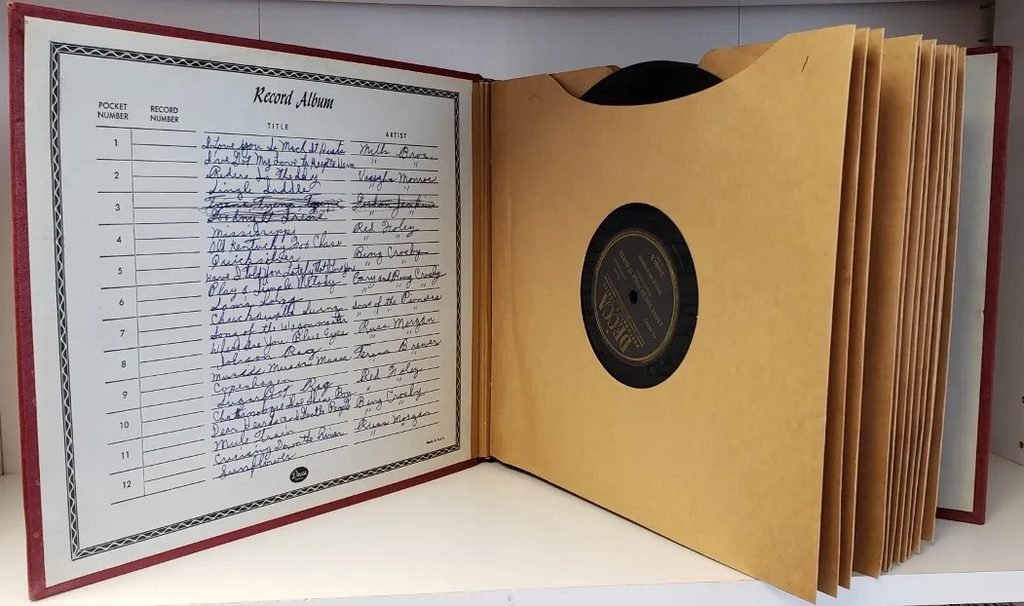
Prior to the 33⅓ Long Play, records had a thicker groove and ran at 78 rpms and therefore were only about 3-5 minutes per side. Because of this, music was sold on multiple records gathered together in a book called an “album.” The new 33⅓ LP could play about 23 minutes per side, therefore, all the records from a typical “album” could by stored on a single 33⅓ LP, but the name “album” stuck.
Other Notable Inventions
Peter Carl Goldmark is credited with several landmark inventions in broadcasting, audio, and space communications:
Field Sequential Color Television (1939–1940)
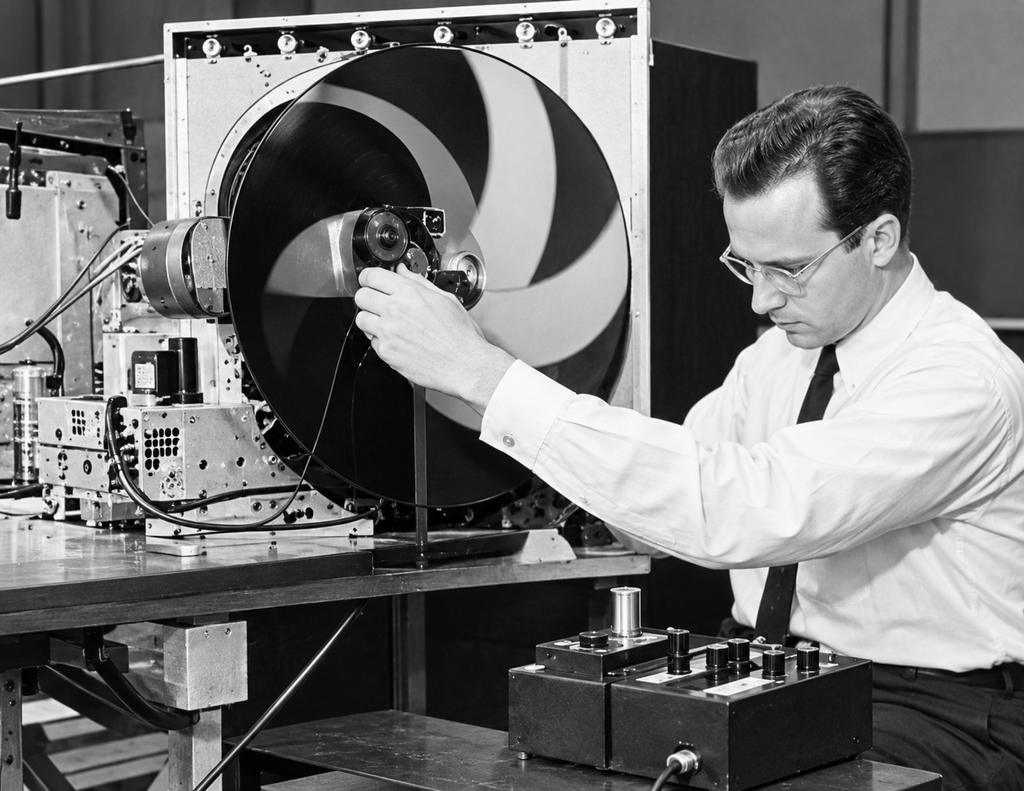
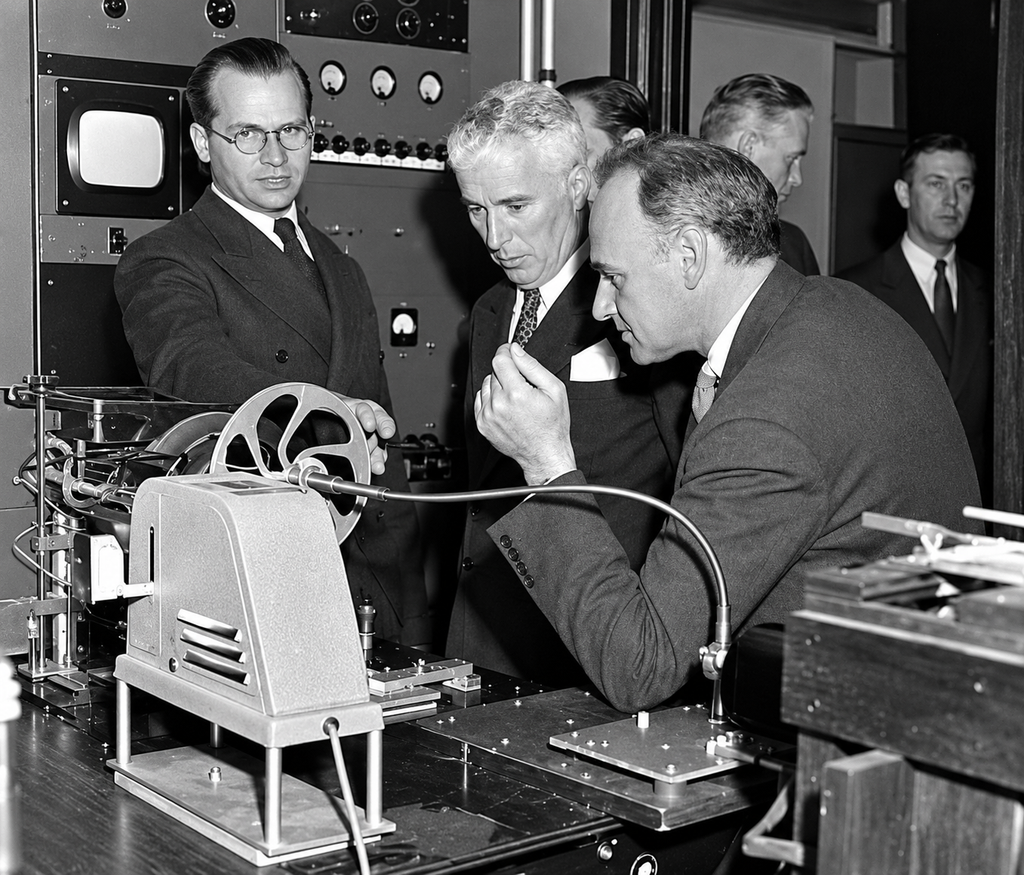
While working as an engineer at CBS, the Hungarian-born Goldmark developed the first practical commercial color television system. Demonstrated to the Federal Communications Commission (FCC) on August 29, 1940, and to the press on September 4, his electro-mechanical design paired an Iconoscope sensor with synchronized red, green, and blue filter wheels spinning at 1,200 rpm inside both the camera and the receiver. Although the FCC approved the system in 1950 and CBS briefly broadcast with it in 1950–1951, broadcasters ultimately abandoned it in favor of an all-electronic RCA/NBC standard compatible with existing black-and-white sets. However, because Goldmark’s color cameras were compact, lightweight, and low-maintenance, they became widely used in closed-circuit television for hospitals, schools, and industry—and were later adapted to transmit live color footage from NASA’s Apollo missions.
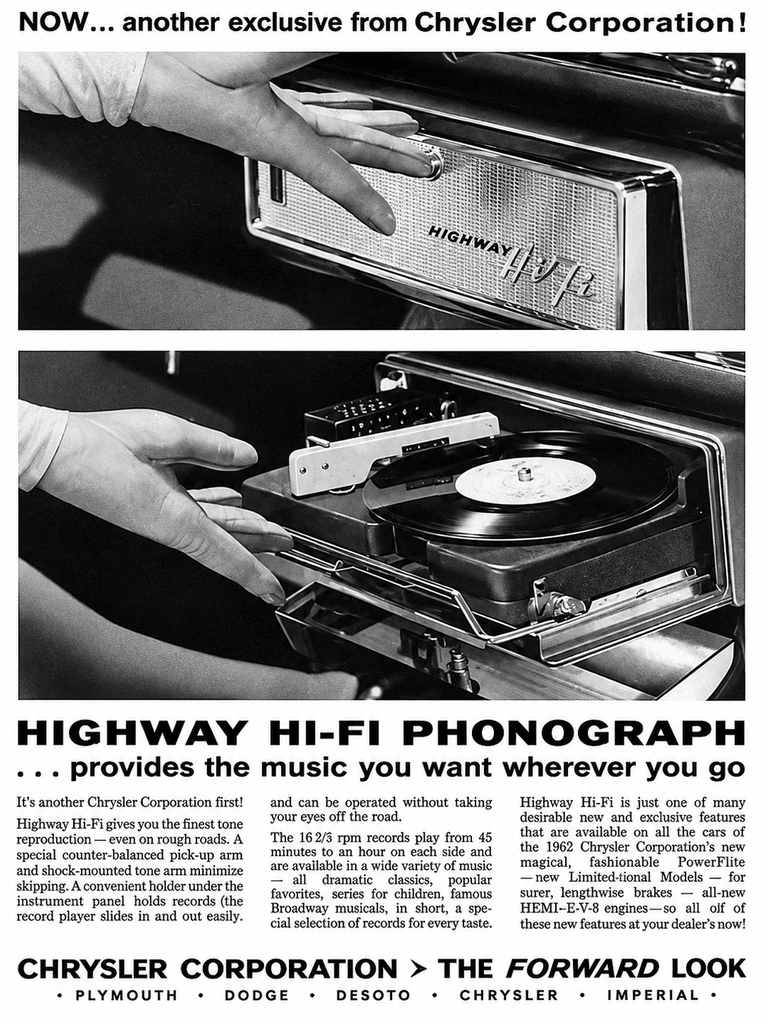
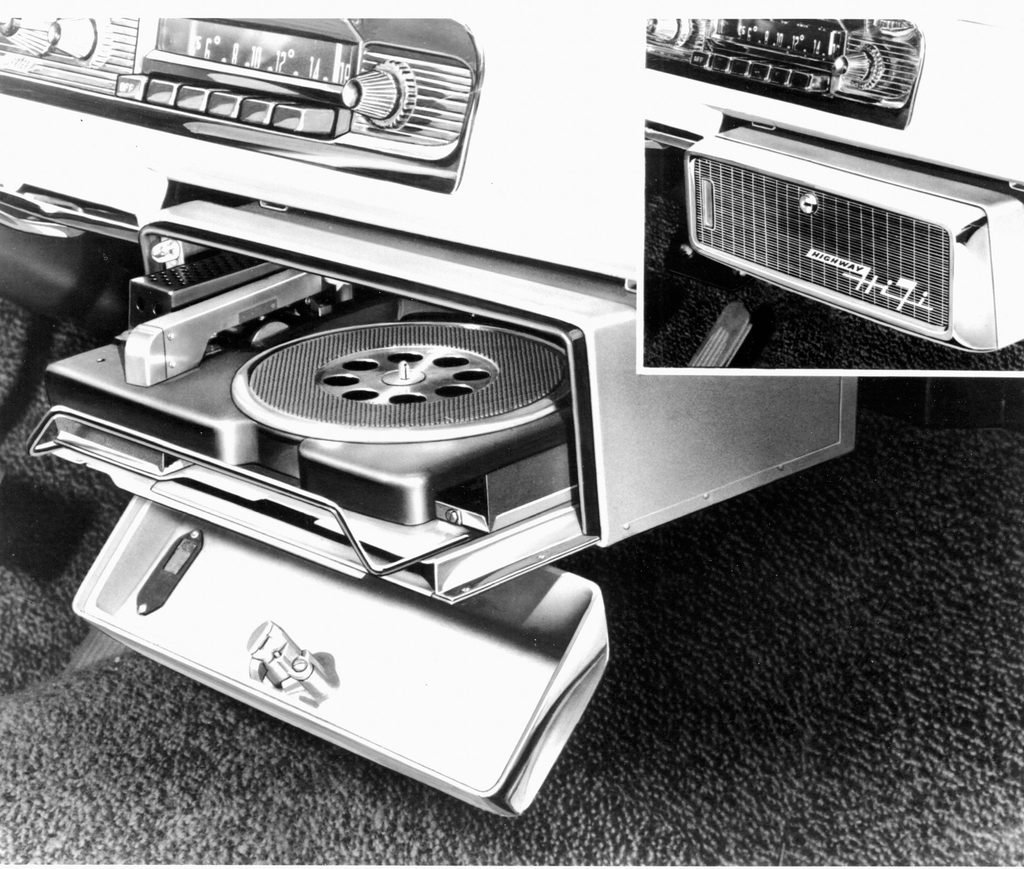
Highway Hi-Fi (1950s)
Goldmark developed an in-car phonograph system engineered to play specialized 7-inch LP records inside moving automobiles without skipping.
Lunar Orbiter Scanning System (1966)
He engineered the high-resolution image scanning and transmission technology that enabled NASA’s Lunar Orbiter spacecraft to capture and beam photographs of the Moon’s surface back to Earth.
Electronic Video Recording (Late 1960s)
Goldmark designed an early home-video playback system that stored pre-recorded programs on unperforated photographic film housed in plastic cartridges, playing them through standard television sets as an early precursor to modern home video formats.
Passing
Peter Carl Goldmark died at the age of 71 on December 7, 1977. Cause of death was an automobile accident in Westchester County, New York.
Peter Goldmark: Induction into the Hi-Fi Hall of Fame
Peter Goldmark was a prolific inventor and a talented engineer who developed many of the technologies that we use today. His work on audio recording, colour television, video recording, and space exploration was groundbreaking and highly impactful.
For Hi-Fi enthusiasts, his invention of the vinyl Long Playing (LP) record in 1948 was the most significant. Here we are, more than 75 years later, still buying turntables and playing LP records at 33⅓ revolutions per minute (RPM), just like those original Columbia records first offered in 1948.
For his contributions to technology and Hi-Fi, Peter Goldmark is inducted into the Hi-Fi Hall of Fame.