
Hi-Fi Hall of Fame
2026 Inductee
Realistic Minimus 7 Loudspeaker
Introduction
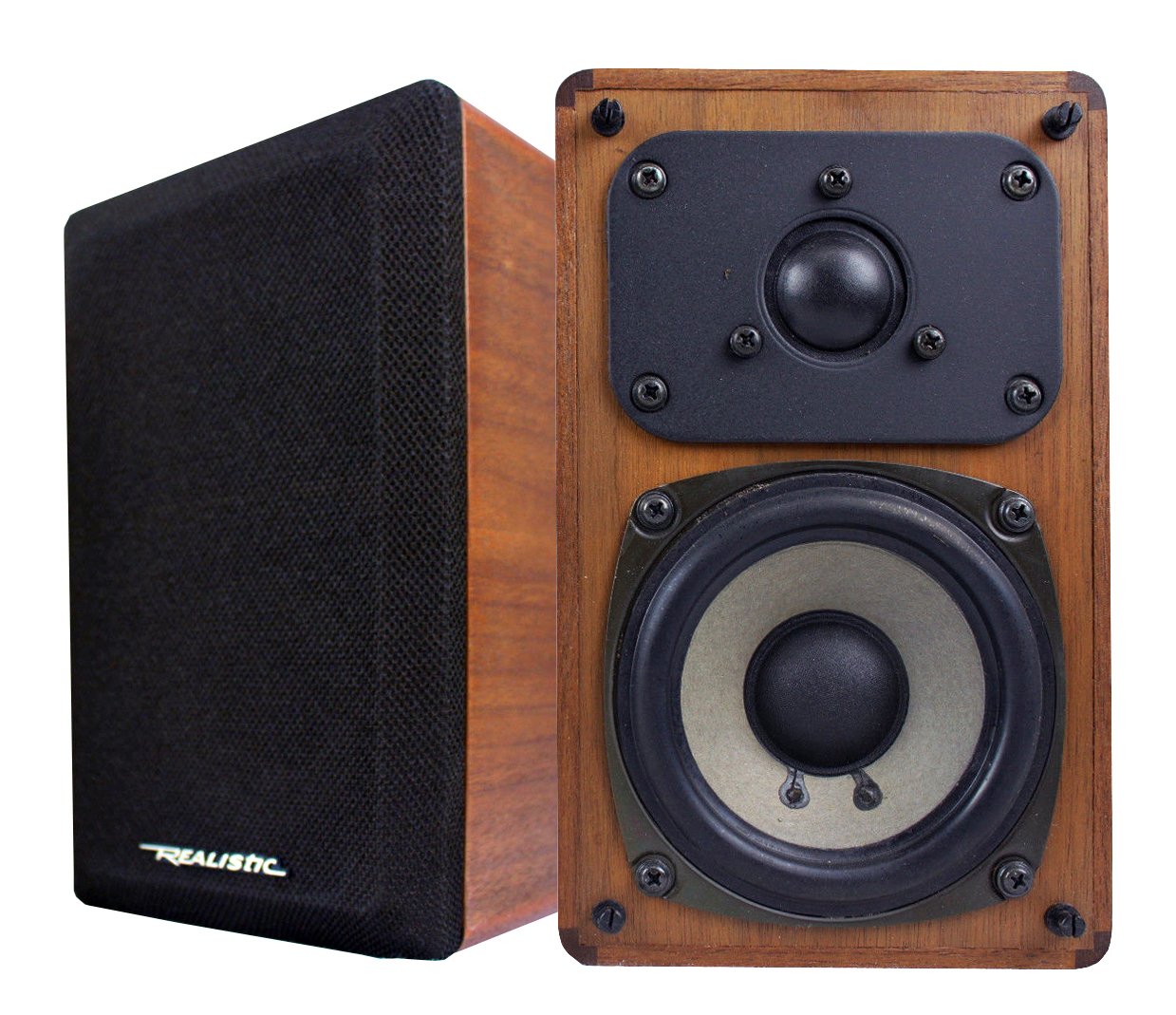
Our next inductee is a miniature loudspeaker that barely qualifies as Hi-Fi: the Realistic Minimus 7. Standing less than 8 inches tall, and equipped with just a 4 inch woofer and a dome tweeter, this little speaker punched way above it’s weight, delivering remarkably good sound at an extraordinarily low price.
Let’s see why this little speaker belongs in the Hi-Fi Hall of Fame.
Radio Shack and Realistic Origins
Founded in Boston in 1921, RadioShack became one of the most recognizable names in American consumer electronics. Originally established as a retailer of radio equipment, the company evolved alongside the rapidly changing technology of the 20th century, eventually offering everything from electronic components and accessories to computers, stereos, speakers and recording equipment.
RadioShack’s greatest influence came through its extensive network of neighborhood stores. For generations of electronics enthusiasts, these shops were an accessible introduction to hi-fi, electronics and experimentation. The company’s famous catalogs were equally important, presenting an enormous range of products to consumers who might otherwise have had limited access to specialist equipment.

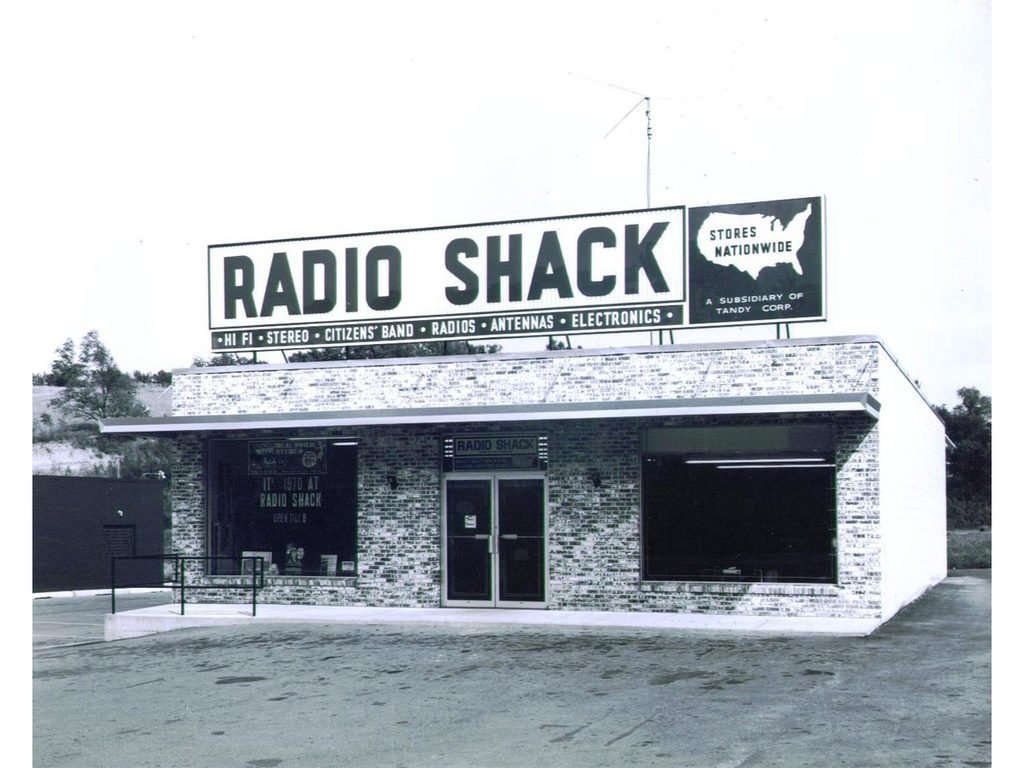

RadioShack also developed a substantial range of products under its own Realistic brand. Introduced in the 1960s, Realistic became particularly well known for affordable audio equipment, including amplifiers, receivers, turntables, headphones and loudspeakers. Products such as the Minimus series of compact speakers demonstrated that impressive audio performance did not necessarily require enormous cabinets or premium prices.
Although RadioShack’s retail empire declined dramatically with the rise of big-box stores and online shopping, its cultural impact remains significant. Its products helped make electronics and hi-fi accessible to millions, while its catalogs became valuable historical records of the changing world of consumer technology.

Radio Shack’s “Family” of Speakers
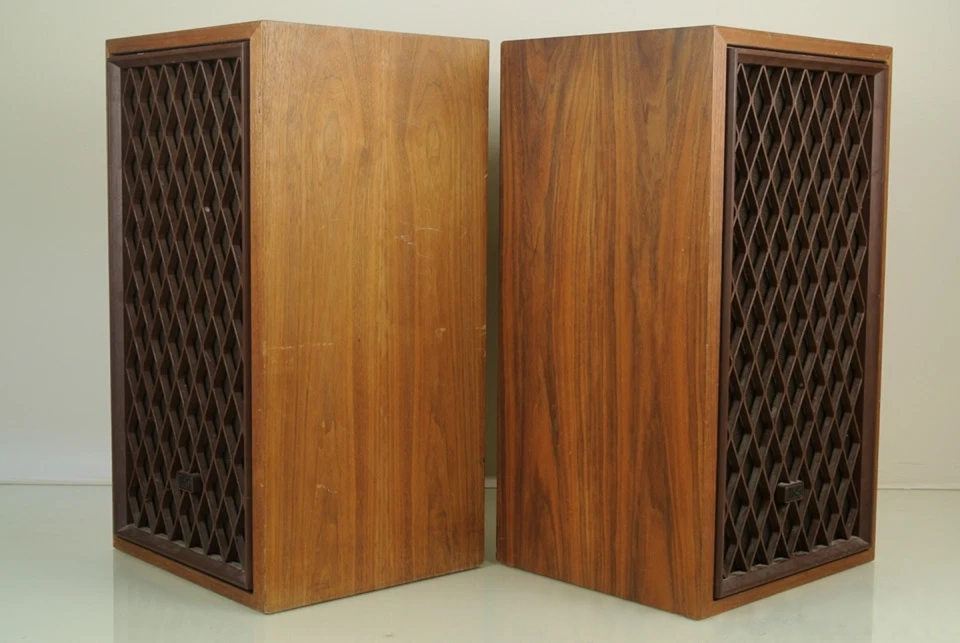
Radio Shack sold a wide range of speakers over the years. Their bookshelf “Nova” series were popular for their good looks, low prices, and decent sound quality.
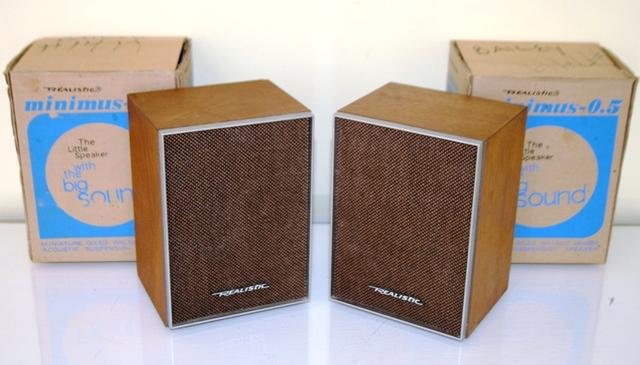
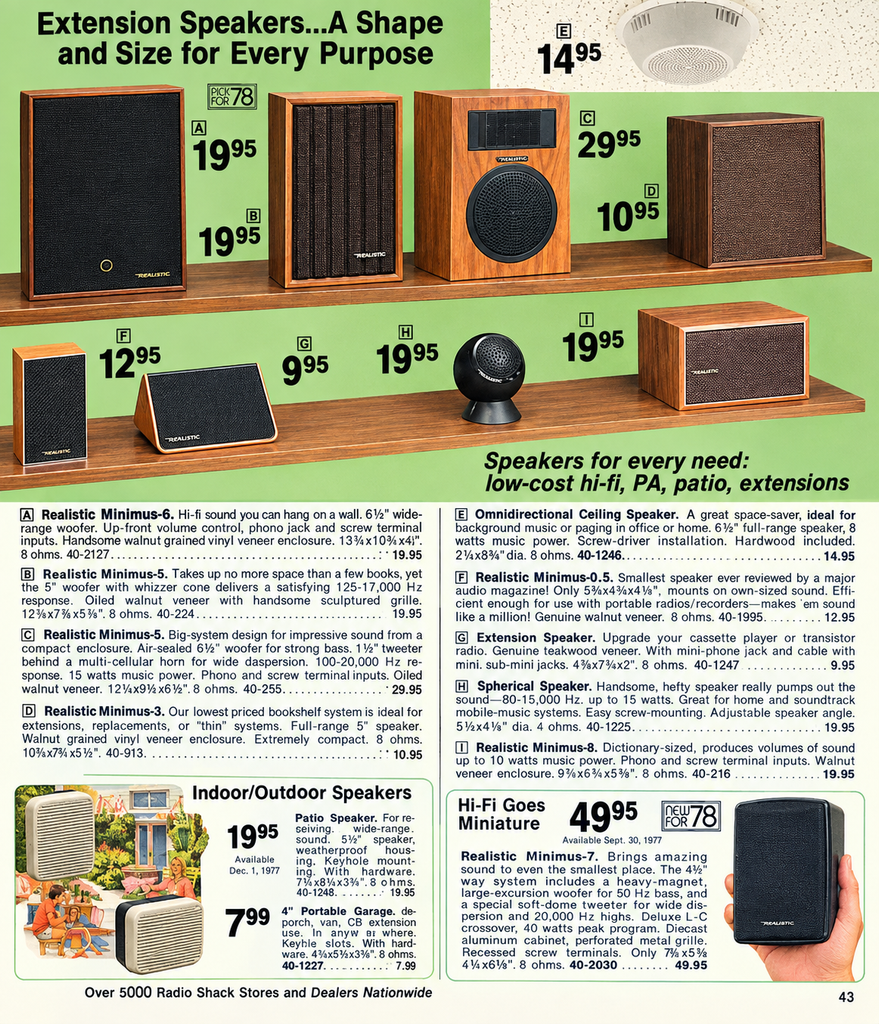
But it was the “Realistic Minimus” line of compact speakers, sold by Radio Shack from the 1970s through the 1990s, that included our current inductee. The Minimus line included more than 15 distinct model variations, including at least 5 major iterations of the iconic Minimus 7 flagship. The Minimus family offered a broad range of cabinet sizes, power ratings, and price tiers:
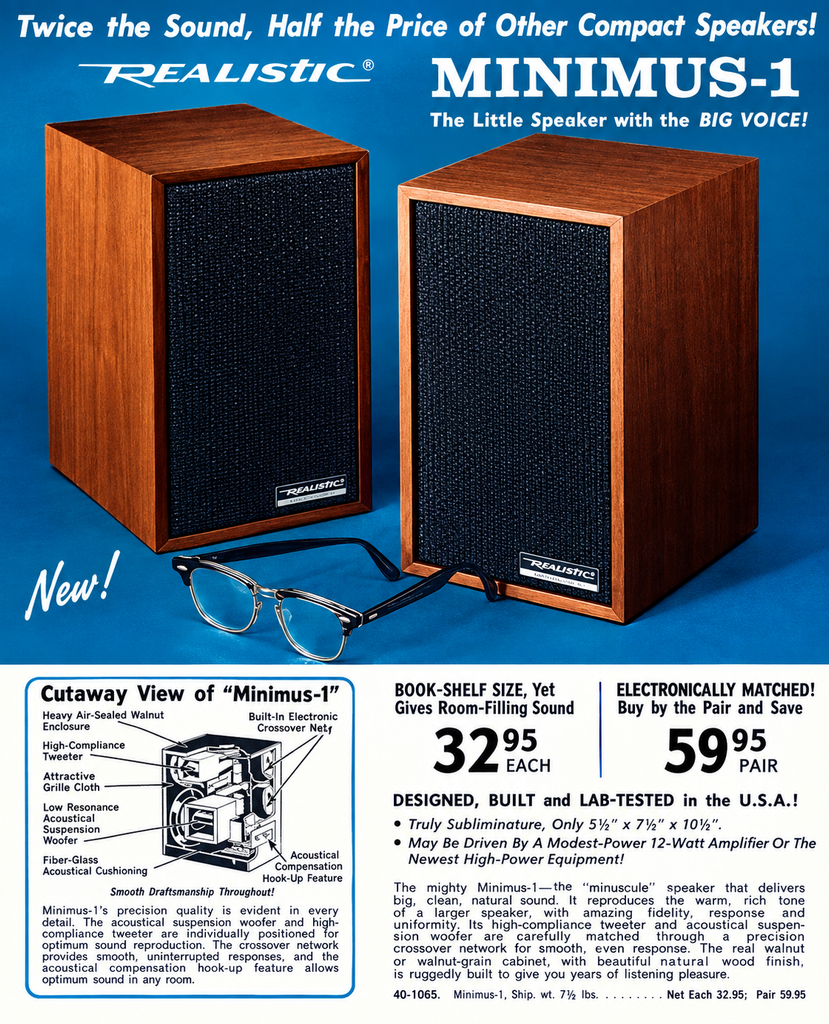
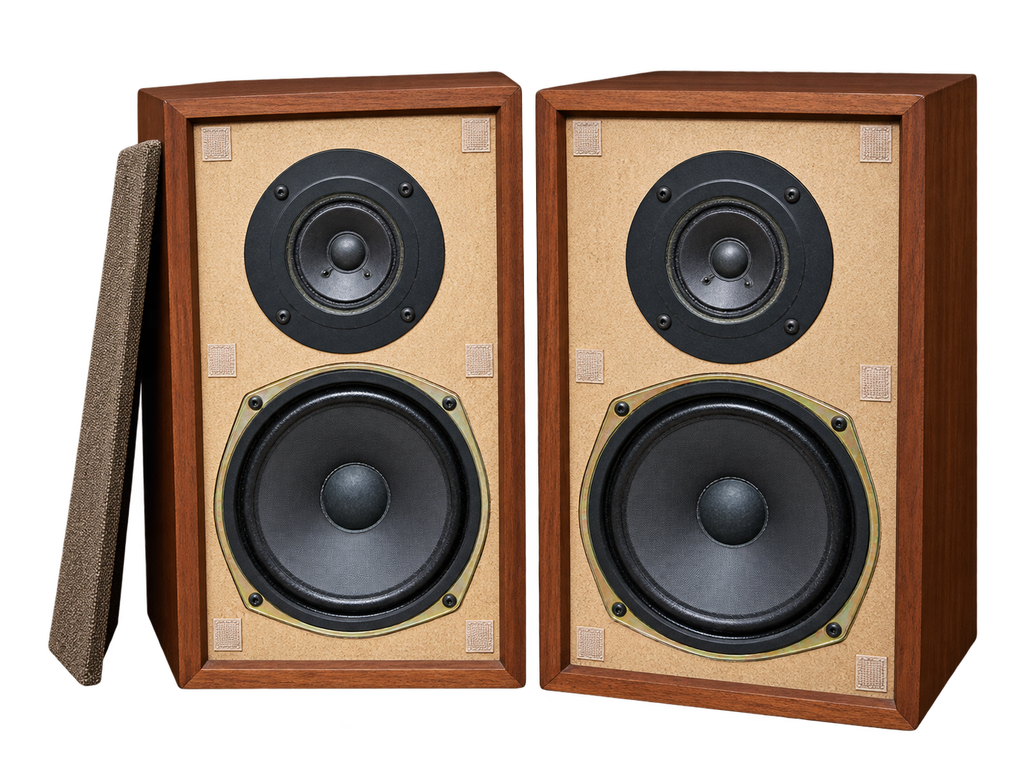
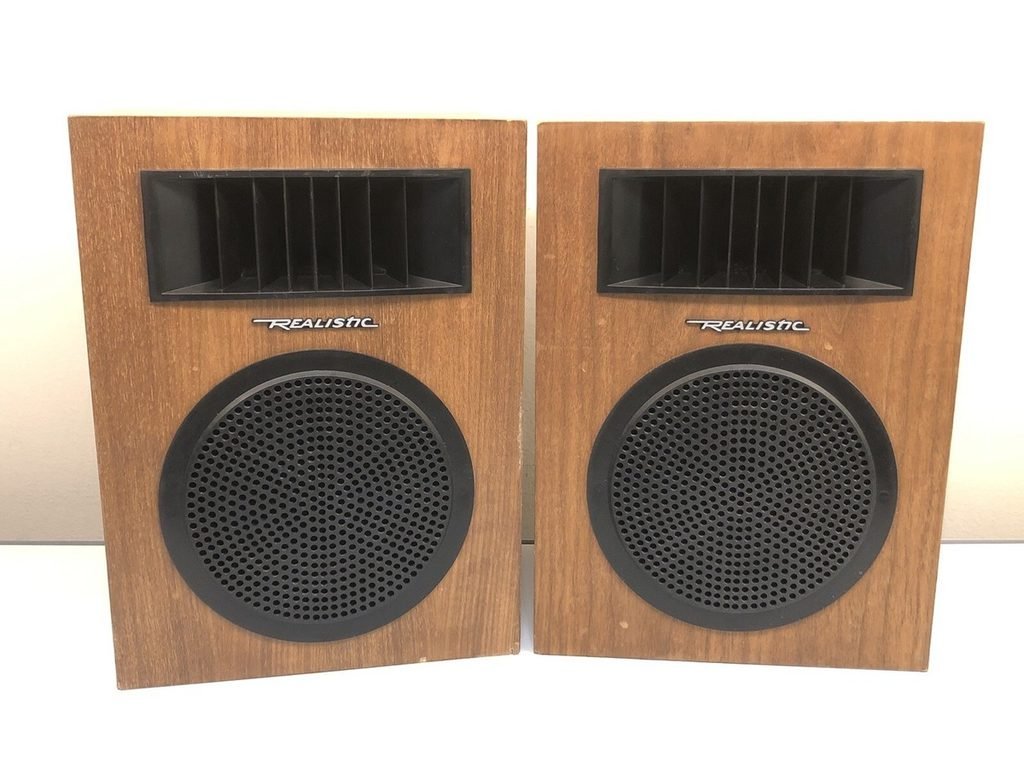
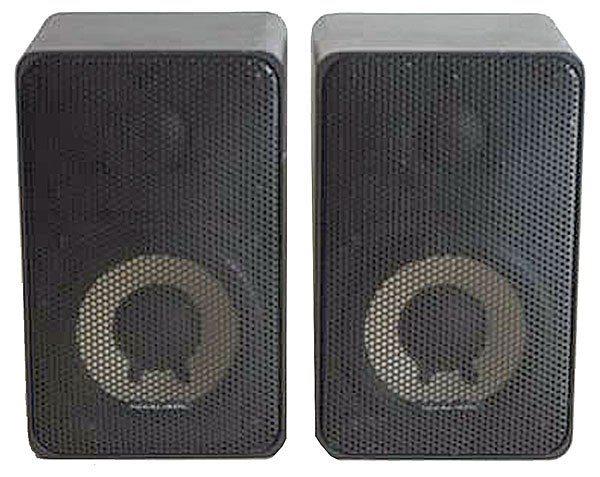
Realistic Minimus 7
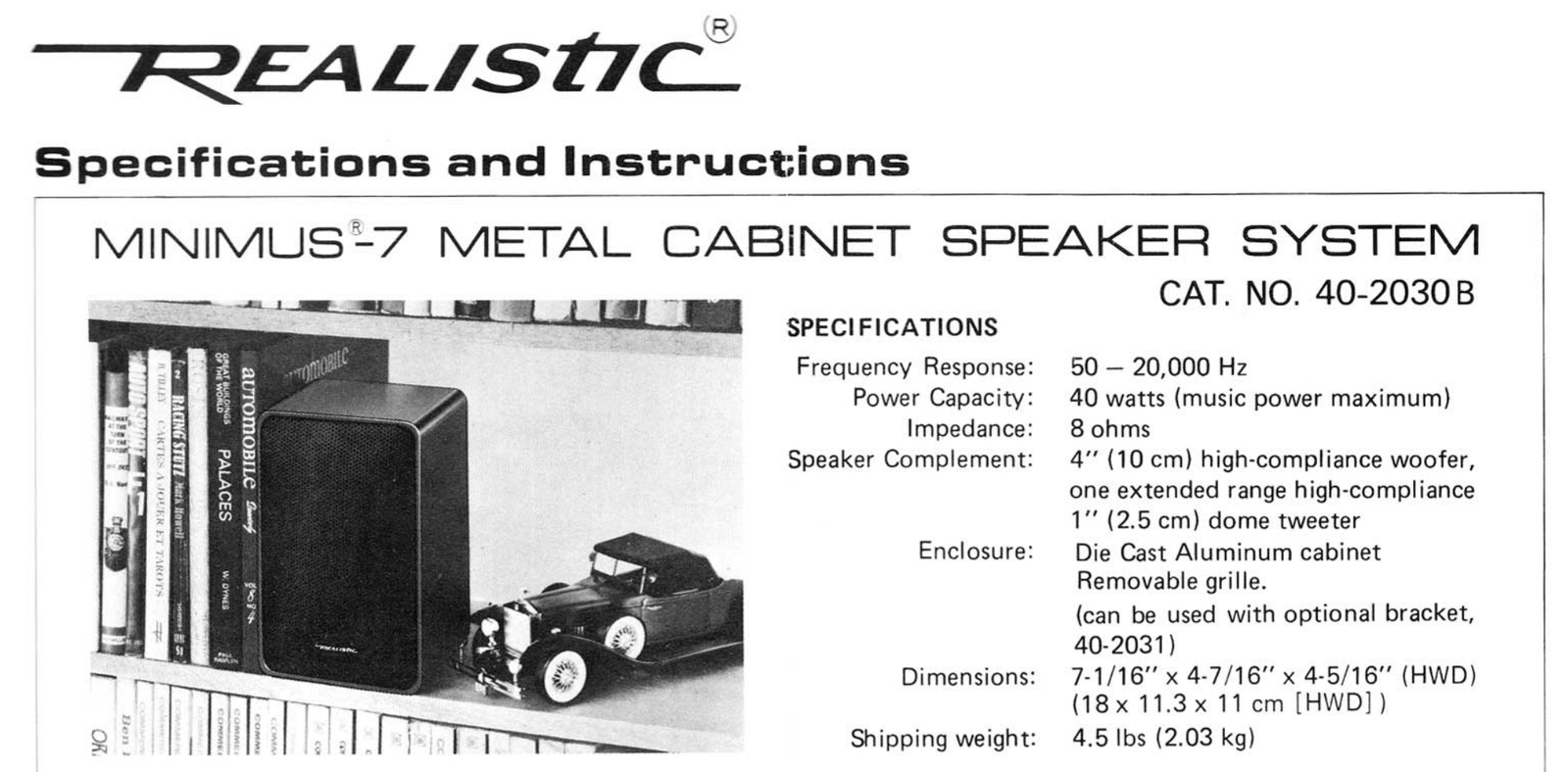
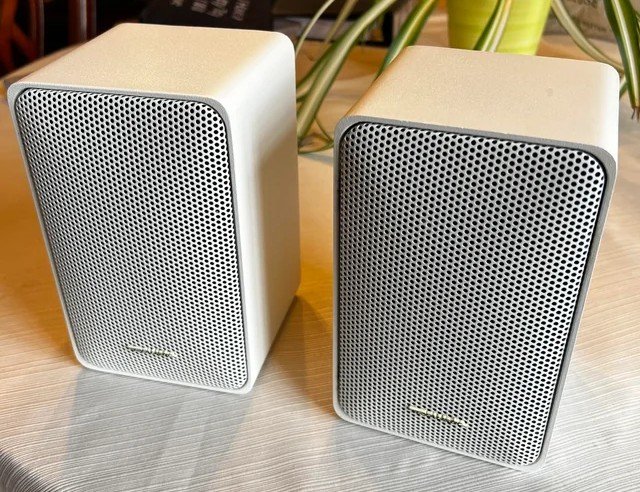
But the real “star” of the Minimus line-up was the Minimus 7. The original model was designed in Japan. Unlike most affordable speakers of the era made of wood or plastic, the Minimus 7 featured a heavy, die-cast aluminum enclosure (usually in black, silver, or white). This made them incredibly solid, rigid, and surprisingly heavy for their size, weighing about 4.5 lbs each.
They were tiny, measuring roughly 7″ high, 4.5″ wide, and 4.25″ deep. They were equipped with a perforated metal mesh grille on the front protecting the drivers, which gives them a utilitarian, industrial look.
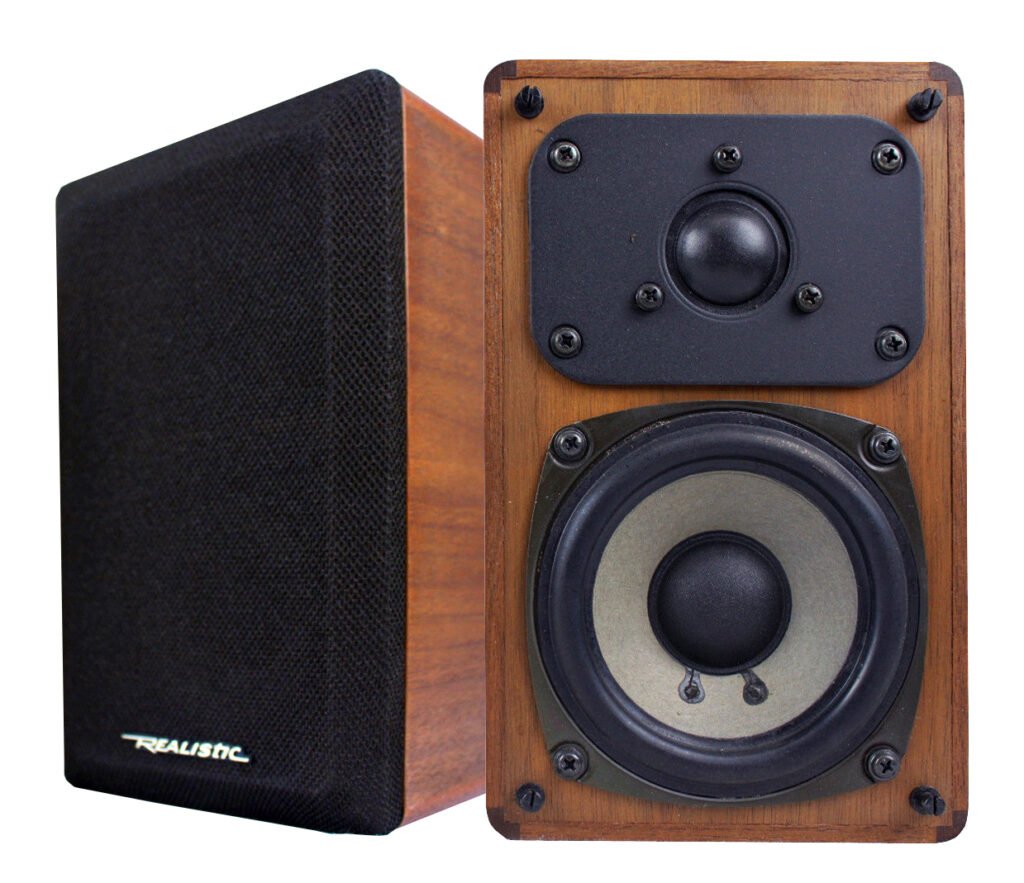
If you pop the grille off a Minimus 7, you will find a simple but highly effective two-way speaker design. The woofer was a 4-inch high-compliance driver with a rubber surround. The rubber surround was a big advantage, as it didn’t deteriorate over time like the foam surrounds used on other vintage speakers. The tweeter was a 1-inch soft dome tweeter.
For their size, the Minimus 7s sound remarkably open and detailed. The high frequencies are crisp, and the midrange (vocals and acoustic instruments) is clean and prominent. Because the physical cabinet is so small and sealed, they cannot produce deep, thumping bass. The low end starts rolling off significantly below 100 Hz. Audio enthusiasts often pair them with a separate subwoofer to fill out the bottom end. Because they are so small, they function beautifully as “point sources,” meaning they create a fantastic, precise stereo image where you can easily pinpoint where instruments are placed in the music.
RadioShack sold millions of them because they were incredibly versatile and affordable (often going on sale for $30 a pair). People used them for everything from apartment stereo setups and bedroom speakers to car audio, surround-sound satellites, and PC desk speakers. A lot of audiophiles got their start with a pair of Minimus 7s.
Today, they have a cult following. Vintage audio hobbyists still buy them secondhand to modify the internal crossovers, transforming a cheap RadioShack classic into a genuinely high-end desktop monitor.
Minimus 7 Versions
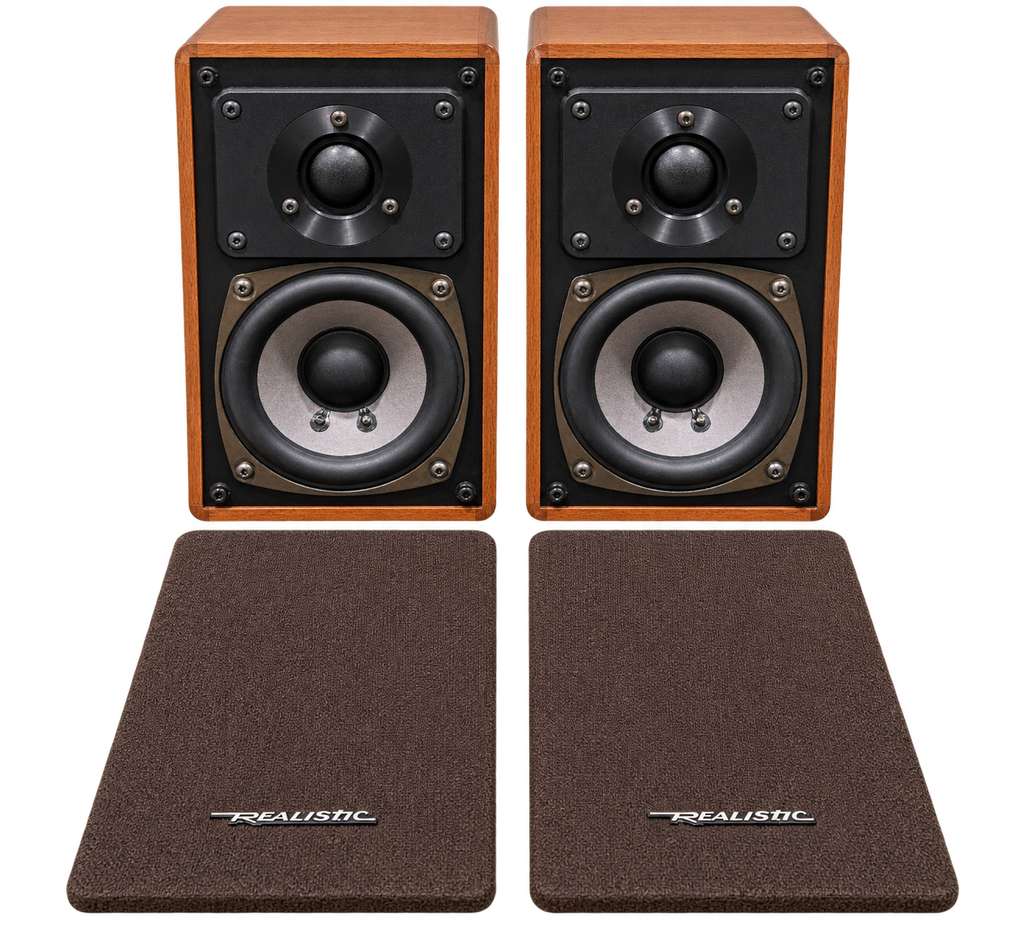
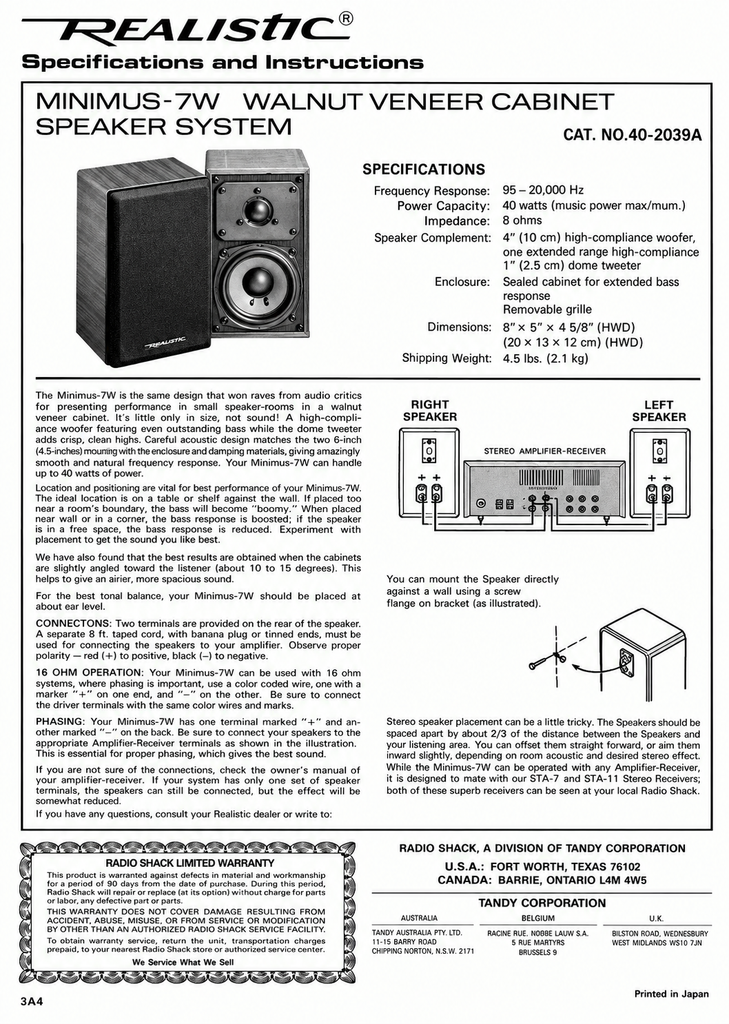
The Minimus-7 was introduced in 1977 and remained in production for over two decades, going through multiple revisions.
Rebranding: the Post-Realistic Era
First introduced in 1977, the original Realistic-branded Minimus-7 had a remarkably long run of 16 years before being officially retired in 1993 (though select variations like the wood-veneer Minimus-7W lingered slightly into 1994).
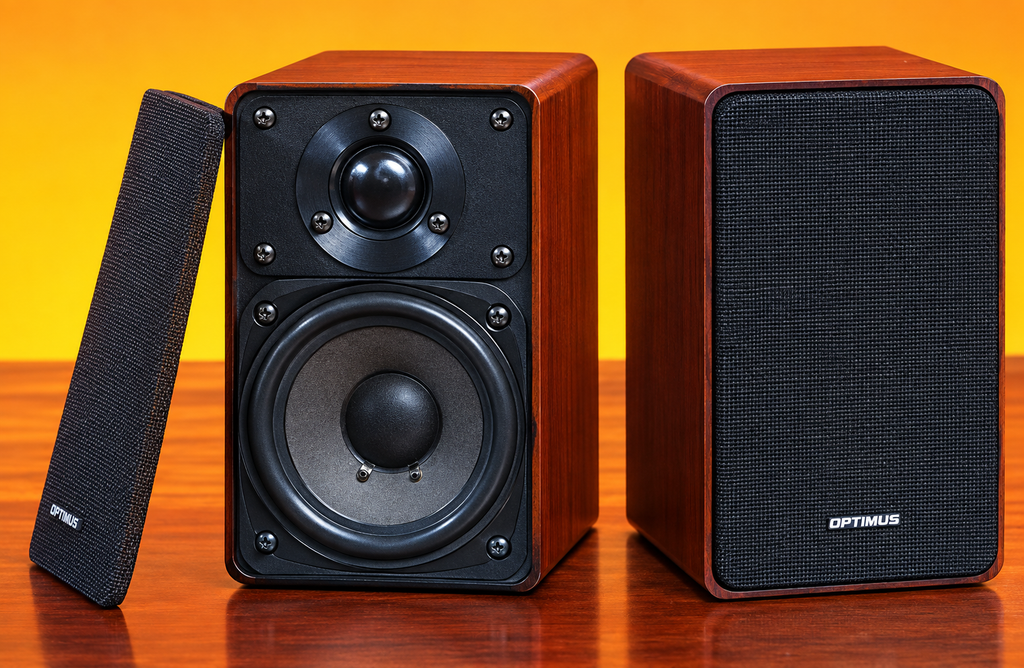
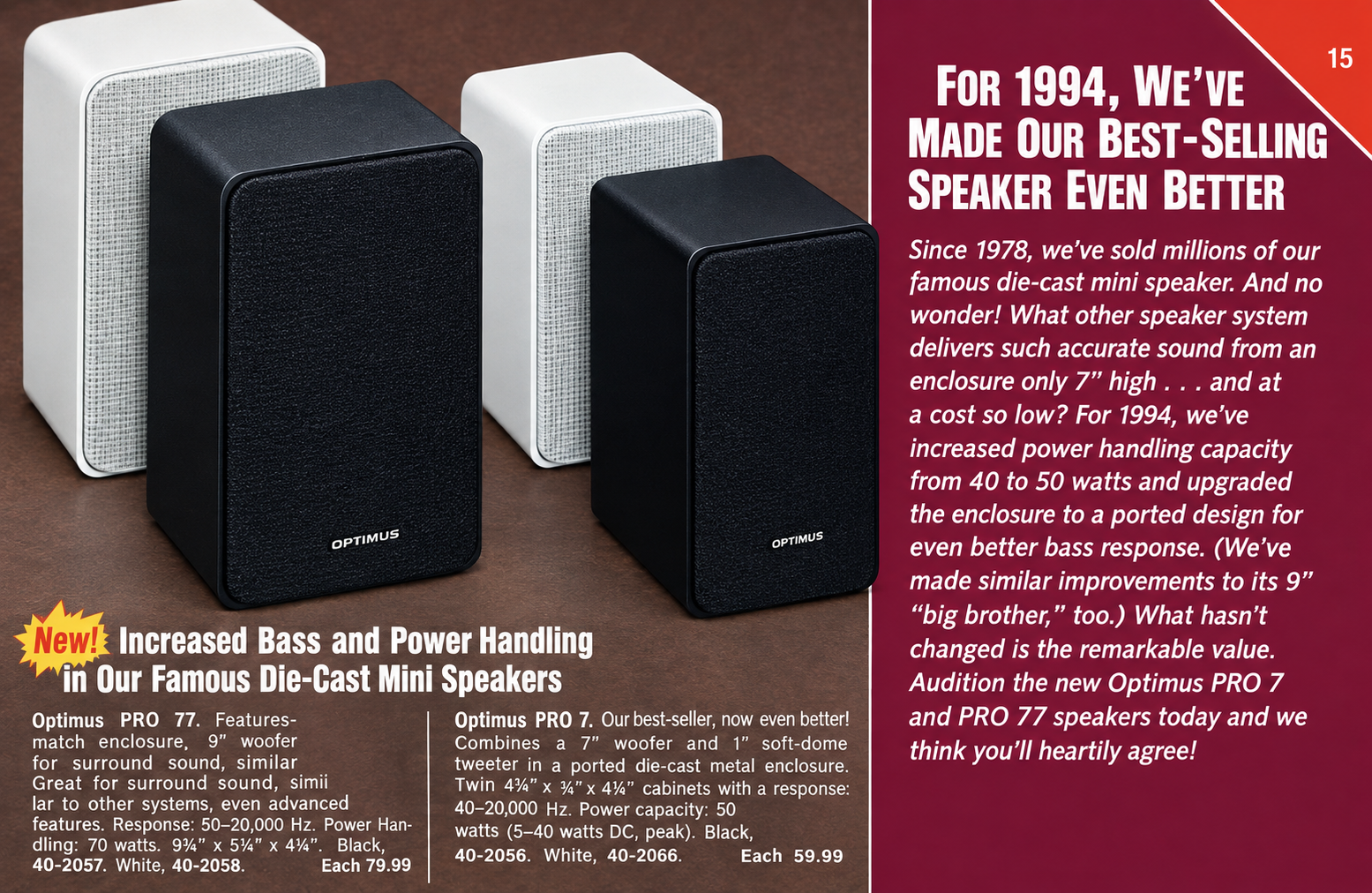
Following the phase-out of the “Realistic” brand name for audio gear, Radio Shack transitioned the line to the Optimus label. The Optimus Pro-7 appeared in catalogs starting around 1994, quickly evolving into magnetically shielded variants like the Pro-7AV for home theater setups. This succeeding lineage remained active through the mid-to-late 1990s before being phased out as Radio Shack shifted its speaker offerings toward other plastic-housed and ported multi-media designs toward the end of the decade.
Realistic Minimus 7: Induction into the Hi-Fi Hall of Fame
The Realistic Minimus 7 is not an obvious choice for induction into the Hall of Fame. It is barely a “Hi-Fi” speaker, some would say. With a limited frequency response, low power handling, and other audio limitations, it is no match for “real” hi-fi speakers.
Even the brand – Realistic – was not known as a great manufacturer of Hi-Fi equipment. Their best products were often made by other manufacturers and simply “badged” as Realistic.
But there is something about this little speaker that says it belongs here. The ambitious design, using a solid woofer, a dome tweeter, and a solid cabinet. The performance, which exceeded expectations, given the small size and the low price. The longevity in the market: there must be something great about a speaker that survives and thrives throughout the golden age of Hi-Fi. And the fact that millions of audiophiles got their first “taste” of Hi-Fi when listening to a pair of these speakers in a college dormitory, or a friends house, or even their parents place.
For all of these reasons, the Realistic Minimus 7 is inducted into the Hi-Fi Hall of Fame.